Zenfix: The Retro-Futuristic Font That Captures a Bold New Era
There is a specific kind of visual language that triggers instant nostalgia for a future that never quite happened. It is the aesthetic of 1970s sci-fi paperback covers, the dashboard of a concept car from the World's Fair, and the bold, geometric optimism of early space exploration. If you are trying to tap into that specific energy—the feeling of analog machinery meeting cosmic ambition—standard modern sans-serifs often fall flat. They lack the weight, the texture, and the personality required to sell that retro-futuristic dream. This is precisely why typography like Zenfix has become such a powerful tool for designers and brand strategists today. It is not just a font; it is a complete visual attitude that bridges the gap between vintage charm and contemporary impact.
Capturing the "Analog Future" Aesthetic
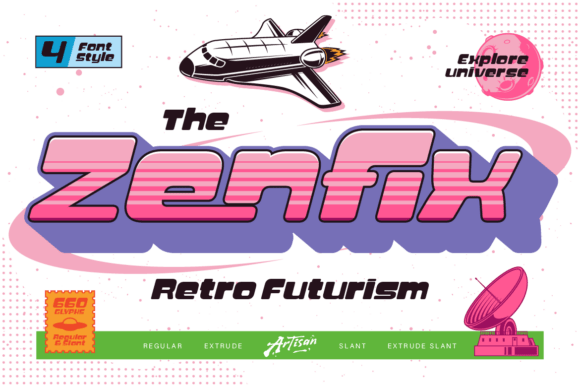
When we talk about the visual appeal of a display typeface like Zenfix, we are discussing more than just legibility. We are talking about visual consistency and mood. This typeface is characterized by its chunky shapes and rounded edges, giving it a softer, more approachable feel than the sharp, aggressive geometry of purely industrial fonts. The defining feature, however, is the extrude style. This three-dimensional shading effect creates an immediate sense of depth and solidity, making the text look as if it is physically lifting off the page or screen.
For designers working on brand identity projects, this is incredibly valuable. A logo set in Zenfix doesn't just spell out a company name; it announces it. The "retro future" look suggests innovation, durability, and a playful yet serious approach to technology. It works exceptionally well for brands that want to stand out from the sea of minimalist, flat designs that have dominated the last decade. Whether you are working on packaging design for a craft brewery or creating a header for a tech startup, the font provides a built-in stylistic direction that is hard to replicate with standard sans serif fonts.
Practical Applications for Modern Creators
You might be wondering how a font with such a distinct personality fits into modern workflows. The key is understanding where display fonts perform best. Zenfix is not intended for long blocks of body copy; rather, it is designed to be the anchor of your layout. It shines brightest in situations where you need to grab attention immediately.
Consider the world of social media graphics. On platforms like Instagram or TikTok, you have a fraction of a second to stop a user from scrolling. A bold, extruded headline in Zenfix creates a focal point that is impossible to ignore. It works beautifully for:
- Poster Design: Creating event posters for music festivals, movie nights, or gallery exhibitions where a vintage vibe is desired.
- Merchandise: Designing T-shirts, tote bags, and hats where the typography needs to be the main visual element.
- YouTube Thumbnails: Ensuring your video title pops against a busy background, increasing click-through rates.
- Podcast Covers: Giving your audio brand a visual identity that suggests high production value and distinct personality.
For web design, using Zenfix for hero sections or landing page headers can instantly set the tone for the user experience. It pairs surprisingly well with clean, minimal sans serif or serif fonts for body text, creating a hierarchy that is both functional and stylistically rich.
Strategic Font Pairing and Readability
One of the most common questions regarding creative fonts is how to pair them without creating visual chaos. Because Zenfix has such a strong voice, it requires a "supporting actor" that is quieter and more neutral. If you pair it with another decorative or handwritten font, the result will likely be illegible and overwhelming.
A practical approach to font pairing is to contrast the weight and style. Since Zenfix is bold, chunky, and textured, try pairing it with a light-weight geometric sans serif font for your subheadings and body copy. Fonts like Helvetica, Futura, or even a clean modern typography option like Inter provide the breathing room necessary to let the headline shine. This contrast ensures that your editorial design remains professional and easy to read, even when utilizing a highly stylized asset.
Furthermore, always consider the background. When using a font with an extrude effect, ensure there is enough contrast between the text color and the background. Busy photographic backgrounds can sometimes get tangled up with the "shadow" part of the extrude, so solid colors or subtle gradients often yield the best results for visual consistency.
Elevating Commercial and Digital Projects
For small business owners and entrepreneurs, the decision to invest in a premium font often comes down to licensing and versatility. Free fonts found on random repositories often come with vague licensing agreements that can put your business at legal risk, especially when you start scaling into merchandise or paid advertising. A professionally designed typeface like Zenfix usually comes with clear commercial licensing, giving you peace of mind to use the asset in logo design, digital products, and physical goods.
Think about the packaging on a shelf. A consumer scans hundreds of items in seconds. A display font that evokes a specific emotion—like the adventurous spirit of space exploration—can be the deciding factor that makes someone pick up your product. This is the essence of marketing assets: using visual cues to shortcut the decision-making process for your audience.
Even in blogging and editorial layouts, a touch of retro-futurism can refresh a stale design. Using Zenfix for pull quotes, chapter titles, or section breaks adds a level of design sophistication that signals to the reader that this content is curated and high-quality. It moves a simple blog post into the realm of digital publishing.
Making the Right Choice for Your Brand
Ultimately, choosing a typeface is about alignment. Does the font match the voice of the project? If your brand is serious, corporate, and traditional, a retro-futuristic display font might send the wrong message. However, if your brand is innovative, playful, creative, or nostalgic, Zenfix offers a unique visual shorthand. It tells the audience that you appreciate design history but are looking toward the future.
When evaluating this font for your next project, take the time to test it in context. Don't just look at the alphabet in isolation. Type out your actual headlines. Test it on a mockup of your website or your packaging design. See how the rounded edges interact with your imagery. By treating typography as a core component of your strategy rather than an afterthought, you ensure that your brand recognition grows stronger with every asset you create.