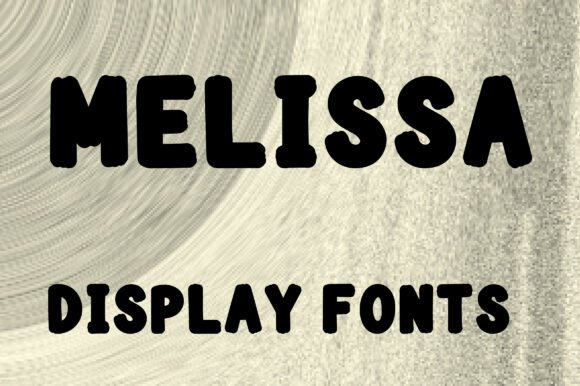
MELISSA: A Playful Font That Brings Joy to Your Brand
There's a certain magic in designs that make people smile before they even read the words. You know the feeling—when a logo catches your eye, when a poster feels inviting, when packaging practically jumps off the shelf. That warmth often comes down to typography, and finding a typeface that radiates genuine personality can transform how your audience connects with your work. MELISSA is one of those rare display fonts that manages to be bold and soft at the same time, carrying a handcrafted charm with retro undertones that feels both nostalgic and refreshingly modern.
With its thick rounded strokes, smooth curves, and slightly quirky letterforms, MELISSA creates an instantly approachable presence. It's the kind of font that feels like a friendly conversation rather than a corporate announcement. Designed with uppercase letters A through Z and numbers 0 through 9, it's built for projects where you want your words to carry weight without feeling heavy. Think of a children's book title, a bakery logo, or a headline on a handmade soap label—these are the spaces where MELISSA truly shines.
Where This Creative Font Finds Its Sweet Spot
Let's talk about real applications, because a beautiful typeface means nothing if it doesn't serve a purpose. If you're a small business owner building a brand identity from scratch, MELISSA offers a distinctive voice that helps you stand apart from competitors relying on overused sans serif fonts. Imagine it stamped on a coffee bag, screen-printed on tote bags, or featured prominently on a farmers market banner. The retro-inspired character gives products an artisanal, trustworthy feel—exactly what customers look for when they want something crafted with care.
Social media is another arena where this display font pulls its weight. Instagram posts, Pinterest pins, and Facebook headers all compete for split-second attention. MELISSA's eye-catching personality stops the scroll. Pair it with a clean sans serif font for body text, and you've got a visual hierarchy that's both readable and memorable. Content creators and bloggers can use it for quote graphics, course titles, or podcast cover art. The cheerful warmth it brings makes even serious topics feel accessible without sacrificing credibility.
For those working on invitations—whether for weddings, baby showers, or birthday parties—this typeface bridges the gap between playful and elegant. Its rounded forms soften the edges, while the bold weight ensures names and dates pop against decorative backgrounds. Digital product designers creating printable planners, wall art, or educational materials will find it equally useful. It's a premium font that punches well above its weight in versatility.
Matching Typography to Your Project Goals
Choosing the right font style isn't just about aesthetics—it's about communication. Every typeface carries emotional signals, and MELISSA sends a clear message: friendly, creative, and confident. If your project calls for authority and tradition, you'd lean toward a serif font. If minimalism is the goal, a clean sans serif makes sense. But when you need warmth, personality, and a touch of whimsy, a handcrafted display font like MELISSA becomes the right tool for the job.
Here's practical advice I share with clients: start by defining the emotion you want your audience to feel. Then test that emotion against your font choices. Print a sample. View it on a phone screen. Pin it to a mockup board. Does it still communicate what you intended? MELISSA tends to hold up well across these tests because its design is intentional—every curve and stroke serves the overall mood. The slightly quirky letterforms add character without crossing into illegibility, which is a balance many decorative fonts fail to strike.
Font pairing deserves attention too. A display font works best when it's supported by a complementary typeface for longer text. Try combining MELISSA with a simple geometric sans serif for modern projects, or with a classic serif font for editorial layouts that need a touch of tradition. The contrast creates visual interest while maintaining readability. Test different sizes, weights, and spacing combinations until the relationship between your heading font and body text feels natural and balanced.
Building Brand Recognition Through Consistent Typography
One of the most overlooked aspects of brand identity is typographic consistency. Businesses invest in logos and color palettes but treat fonts as afterthoughts. That's a missed opportunity. When your audience sees the same typeface across your website, packaging, social media graphics, and print materials, recognition builds quietly and powerfully. MELISSA, as a creative font with a strong visual identity, can anchor that consistency for brands in lifestyle, food, children's products, wellness, and creative services.
Consider a boutique candle company. Their labels use MELISSA. Their Instagram stories feature the same typeface. Their wholesale catalog headers match. Their market booth signage ties everything together. Customers don't consciously analyze the font, but they register the cohesion. It feels professional. It feels intentional. That's how typography works as a marketing asset—it operates beneath conscious awareness while shaping perception.
For entrepreneurs and creative professionals building digital products, this matters even more. Course creators, coaches, and online educators use consistent typography to establish authority and trust. A well-chosen display font for headings, paired with reliable body text, makes ebooks, workshops, and sales pages feel polished. MELISSA's friendly personality helps soften the professional veneer just enough to feel approachable without losing credibility.
Practical Considerations Before You Commit
Before integrating any commercial font into your workflow, a few practical steps save headaches later. First, verify the licensing covers your intended use. Most premium fonts come with clear commercial licensing terms, but it's worth confirming whether your license covers merchandise, digital products, or large-scale print runs if that's your plan. Second, review what's included in the font package. MELISSA provides uppercase letters and numbers, so make sure your project doesn't require lowercase characters or extended symbols before committing.
Readability testing is non-negotiable. Display fonts excel at headlines and short bursts of text, but they're rarely suited for paragraphs. Set your text at the size it will actually appear—not on a 27-inch monitor, but on a phone screen, a printed label, or a poster viewed from ten feet away. If the words are instantly legible, you've found a good fit. If readers squint or stumble, consider scaling up or limiting the font to large-format applications.
Finally, keep your broader design system in mind. Typography doesn't exist in isolation. It works alongside imagery, color, spacing, and layout. A font like MELISSA pairs beautifully with warm color palettes, organic textures, and hand-drawn illustrations. It might clash with ultra-minimalist, cold, corporate aesthetics. Understanding these relationships helps you make smarter design decisions and create work that feels cohesive from every angle.
Finding a typeface that genuinely fits your creative vision takes experimentation, but when it clicks, everything else falls into place. MELISSA brings a distinctive handcrafted warmth to projects that need personality without pretension—and sometimes, that's exactly what your design has been missing.